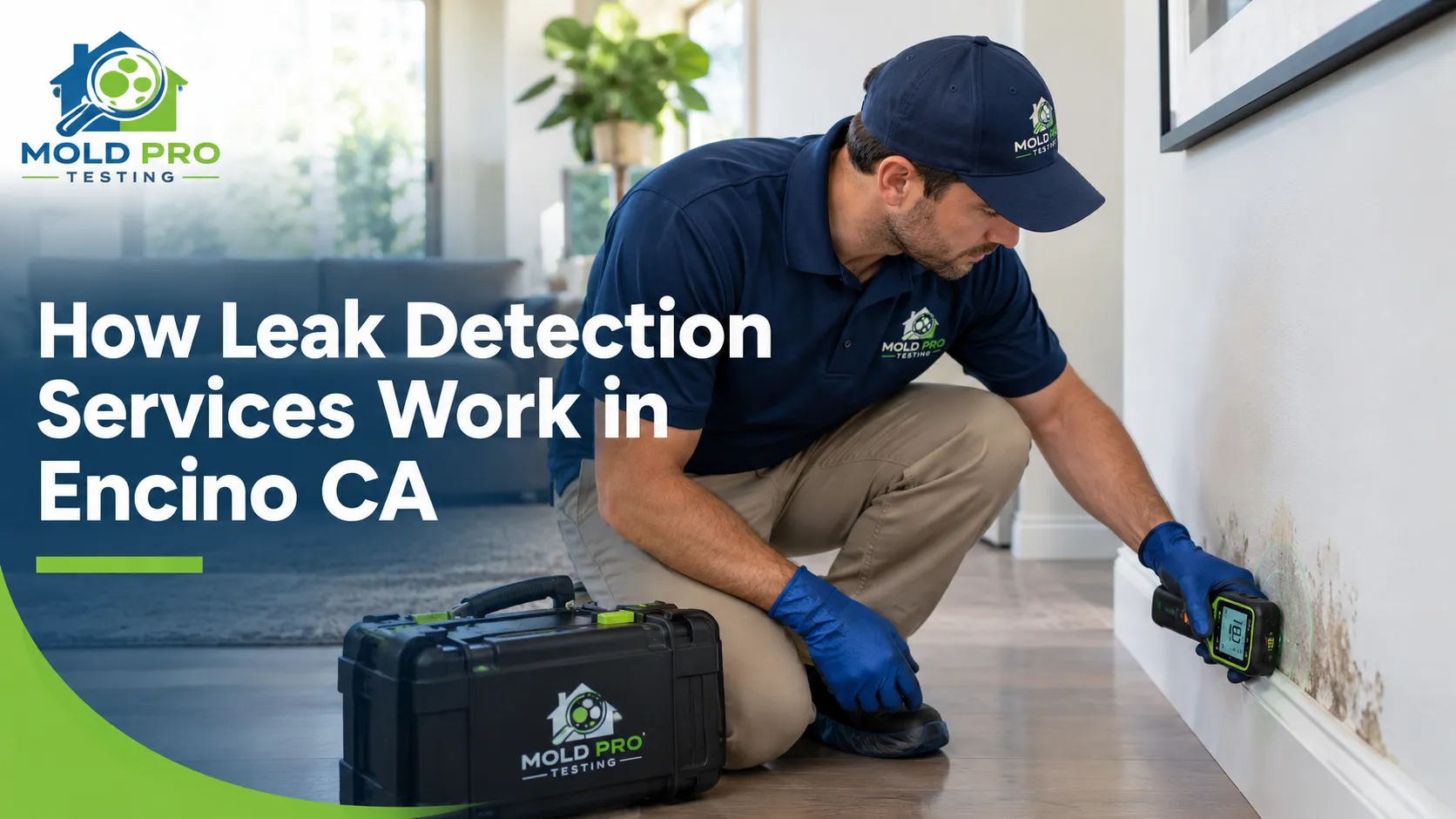


A damp patch on the kitchen tile or a water bill that suddenly jumps can feel like a small annoyance. Under a concrete slab, though, it can mean a pipe is leaking out of sight. Specialists such as Mold Pro Testing in Encino use thermal imaging and moisture mapping to trace where that water goes and to check for mold. The earlier you spot the signs, the less damage you pay for.
So, what are the signs of a slab leak in Encino CA? Think warm floor spots, running water you hear with every tap off, low pressure, a spiking bill, and damp flooring. This guide covers each sign, how slab leak detection works, what repairs cost, permit rules in Los Angeles, and how to pick the right help.
The EPA says the average home loses more than 9,300 gallons of water a year to leaks, and nine percent of homes leak 50 gallons or more a day, based on its EPA’s Fix a Leak Week leak statistics. A slab leak runs day and night, so it can sit well above that average.
Why slab leaks are common in Valley homes
Many homes across Encino and the wider San Fernando Valley sit on concrete slabs, with copper supply lines running through or under the concrete. Those lines carry water at constant pressure, so a pinhole can leak for months before anyone notices. The concrete hides the damage, and the soil underneath slowly softens.
What causes the failure? The usual suspects are shifting soil, corrosion, poor installation, and high water pressure wearing pipes down over time. Southern California adds ground movement from earthquakes, and older copper lines pit and thin with age.
Why act early? A hidden leak can undermine the soil, warp flooring, and feed mold in the walls and subfloor. Small leaks cost a few hundred dollars to find and a few thousand to fix. Ignored leaks cost far more.
Early warning signs and what each one means
Most slab leaks announce themselves quietly. Wondering what are the signs of a slab leak in Encino CA? Start with how your water behaves. Two or more of these signs at once make a slab leak likely.
Watch your water use first:
- A water bill that jumps with no change in habits
- The sound of running or hissing water with every tap off
- Low water pressure across several fixtures
- A water meter that keeps moving when everything is off
Then check the house itself:
- Warm or hot spots on the floor
- Damp, warped, or stained flooring
- New cracks in floors or walls
- A musty smell or visible mold near baseboards
A warm spot points to a hot-line leak. A cold-line leak leaves the floor at normal temperature but still drives up the bill. Low pressure alone can come from a city issue or a failing regulator, so judge it alongside the other signs.
Run a quick meter test. Turn off every tap and appliance, then watch the meter. If it moves, water is escaping somewhere. A water heater that cycles nonstop can also flag a hot-line leak weeks before a warm floor shows up.
| Method | What it does | Typical cost | Best for |
| Thermal imaging and moisture mapping | Finds warm and damp areas without cutting | Quote varies by home size | Hot-line leaks and moisture spread |
| Electronic leak detection | Sensors pinpoint the leak under the slab | $150 to $400 | Pinpointing before cutting concrete |
| Spot repair | Cuts the slab above the leak and replaces the pipe | $500 to $3,000 | One leak with easy access |
| Pipe reroute | Abandons the old line and runs new pipe through walls | $1,500 to $4,500 | Leaks under costly flooring |
| Whole-home repipe | Replaces the supply lines | $4,000 to $15,000+ | Repeated leaks and aging copper |
How detection works from first call to repair
Finding a leak under concrete takes patience and the right tools. Here is the usual order of work:
- Confirm the signs and run a meter test
- Shut off the main valve if water is escaping
- Scan floors and walls with thermal imaging and moisture meters
- Pinpoint the leak with electronic sensors
- Choose spot repair, reroute, or repipe with a licensed plumber
- Dry the area, test for mold, and close out permits
A thermal imaging inspection for hidden moisture maps warm and damp areas without cutting into the floor. That makes it a useful early step. Electronic sensors then narrow the spot, so the plumber cuts as little concrete as possible.
Permits matter here. Encino sits inside the City of Los Angeles, so plumbing permits run through LADBS. A reroute or repipe needs a permit and an inspection, and a limited leak repair can be exempt. Repair work must come from a California C-36 plumbing contractor, so confirm requirements with LADBS before work starts.
Take a family near Ventura Boulevard. Their first search was what are the signs of a slab leak in Encino CA, after the hallway tile felt warm and their bill climbed $80. A meter test showed movement with every tap off, and thermal imaging traced a warm patch to one section of the hall floor. The plumber cut a small access hole instead of opening the whole floor.
What slab leaks cost in Los Angeles
What will it cost? Leak detection usually runs about $150 to $500 in Los Angeles, and most homeowners nationally pay $150 to $400. Angi puts the national average repair near $2,280, with a range of $630 to $4,400. Many Los Angeles homeowners pay $2,000 to $6,000 for a standard repair.
Several things move the price. Leaks under tile or hardwood cost more to reach, and several leaks on one line often justify a reroute. Pipe material, slab damage, water damage cleanup, and permit fees add to the total. A repipe permit typically adds $150 to $500.
Mold is the cost people forget. Water that soaks into subfloors and wall bases can start mold within a day or two. A mold inspection after a hidden leak shows whether materials need drying or removal. Check your insurance policy too, since coverage for pipe repair and water damage varies.
How to choose the right help in Encino
A slab leak usually needs two kinds of help: someone to find the leak and fix the pipe, and someone to check the damage left behind. Use this checklist before you hire:
- A California C-36 plumbing license you can verify at the state licensing board
- Detection before any concrete gets cut
- A written estimate that names the repair method
- Permit handling and inspection scheduling
- Photos or thermal images in the report
- A mold check after the area dries out
A specialist that focuses on moisture, leak detection, and mold, like Mold Pro Testing in Encino, offers thermal imaging, moisture mapping, water leak detection, and 24/7 emergency inspections. It also lists a mold license on its site. A general handyman may cut the slab first and test later, which adds cost and mess.
When homeowners ask what are the signs of a slab leak in Encino CA, a licensed plumber in the San Fernando Valley gives one tip: confirm the leak before anyone cuts concrete. Good detection can save thousands in repair work.
Conclusion
What are the signs of a slab leak in Encino CA? Watch for bill spikes, hidden running water, warm or damp floors, low pressure, and cracks. Run a meter test, shut off the main if water escapes, and confirm the leak before anyone cuts concrete. When you want thermal imaging and moisture checks, reach out to Mold Pro Testing through the contact us page and ask about a leak and mold inspection. Acting early keeps repairs small and the mold risk low.
Frequently asked questions
What are the signs of a slab leak in Encino CA?
Common signs include a bill that jumps with no change in use, running water heard with every tap off, low pressure, warm or damp floor spots, new cracks, and a musty smell. Two or more signs together make a slab leak likely. A meter test helps confirm it.
How do I test for a slab leak at home?
Turn off every tap and appliance, then watch your water meter. If it keeps moving, water is escaping somewhere. Check the water heater too, since constant cycling can flag a hot-line leak. Call a licensed professional to pinpoint the source.
How much does slab leak detection cost in Encino?
Detection usually runs about $150 to $500 in Los Angeles, and most homeowners nationally pay $150 to $400. Price depends on access and tools. Accurate detection means less concrete cut and a lower repair bill.
How much does slab leak repair cost in Los Angeles?
Spot repairs run about $500 to $3,000, reroutes $1,500 to $4,500, and repipes $4,000 to $15,000 or more. Many Los Angeles homeowners pay $2,000 to $6,000 for a standard repair. Get a written quote that names the method.
Do I need a permit for slab leak repair in Encino?
Encino is part of the City of Los Angeles, so LADBS handles plumbing permits. A reroute or repipe needs a permit and inspection, while a limited leak repair can be exempt. A licensed plumber should pull the permit. Confirm with LADBS before work starts.