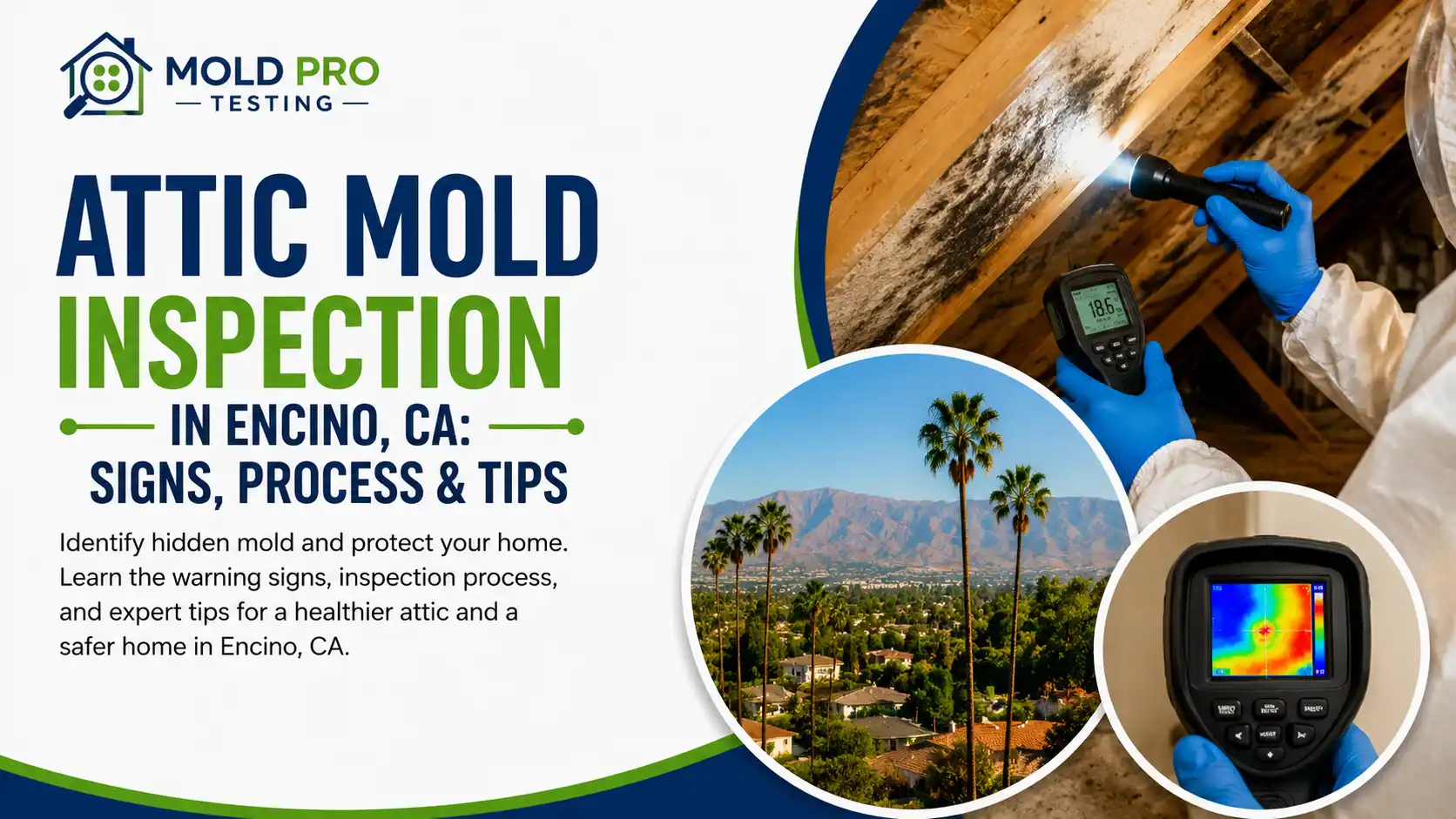
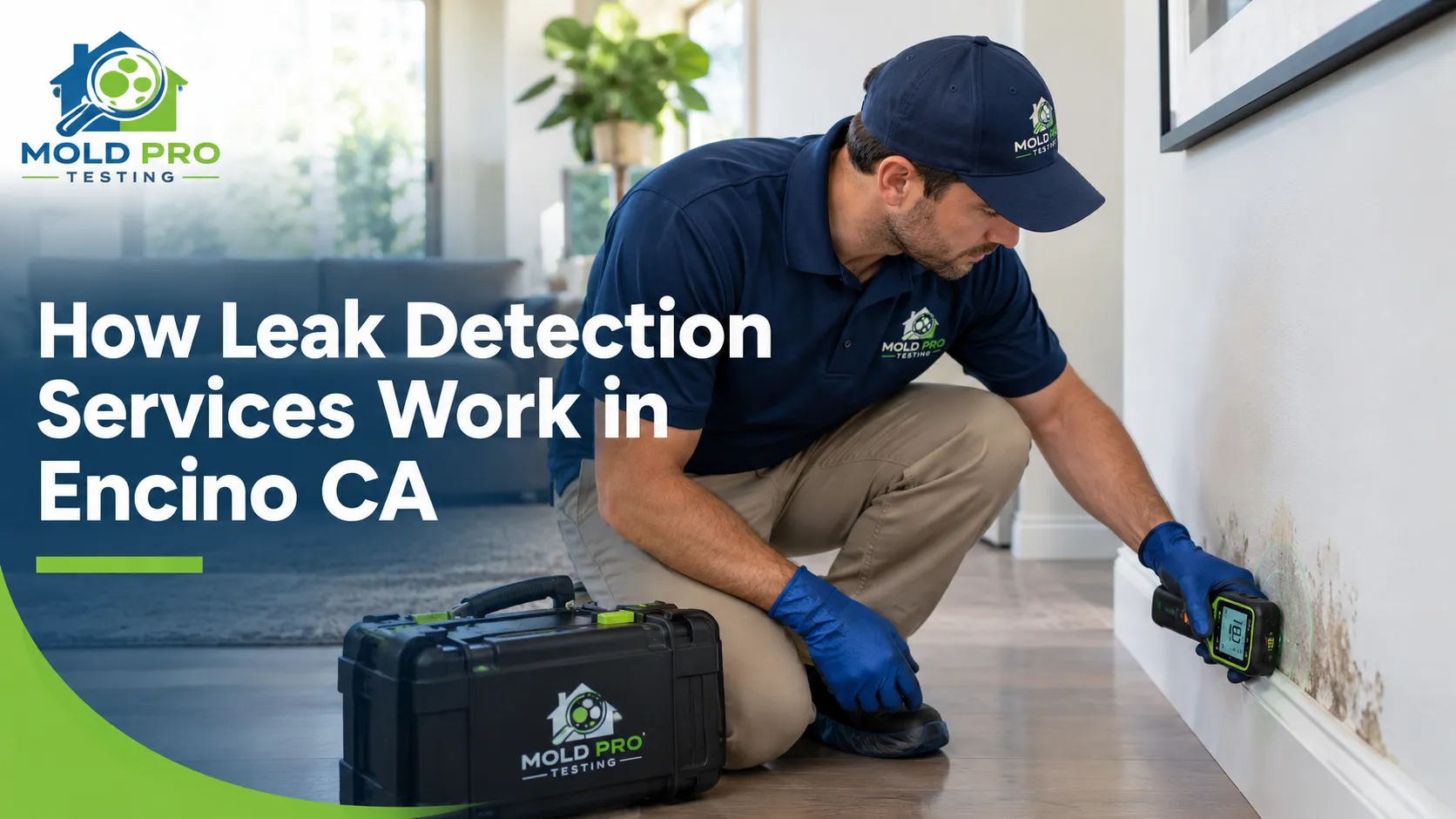

Finding hidden water damage behind drywall or under hard surfaces requires specialized non-invasive tools and precise diagnostic techniques. When plumbing lines fail beneath a concrete slab foundation or deep within exterior supply lines, local property owners rely on modern testing methods to pinpoint issues without causing unnecessary structural destruction. At Mold Pro Testing, we help property owners evaluate environmental health risks and moisture issues so repairs can happen before severe structural decay or hazardous mold blooms take hold. Understanding how leak detection services work in Encino CA allows you to act quickly when unexpected water loss occurs.
According to data published by the Environmental Protection Agency (2026), hidden household leaks waste more than one trillion gallons of water nationwide every year, with ten percent of homes losing over ninety gallons per day to concealed plumbing defects. In Southern California, high mineral content in hard municipal water combined with local seismic activity often causes micro-fractures in copper and galvanized steel lines over time. Recognizing how technicians isolate these hidden breaks helps protect your home investment and long-term property values.
Diagnostic Equipment and Detection Methods
Modern diagnostic testing relies on specialized equipment designed to locate water escaping under pressure. Rather than cutting open large sections of walls or breaking up concrete floors, technicians use non-destructive tools to trace lines and isolate thermal or sound anomalies.
Acoustic Listening Equipment
Acoustic devices amplify the sound frequencies created by water escaping a pressurized pipe. Technicians use ground microphones and acoustic disc sensors to hear subtle vibrations through concrete, tile, and soil. By adjusting frequency filters, they distinguish between ambient noise and the specific hiss of a high-pressure line leak.
Thermal Imaging Cameras
Infrared thermography scans surface temperature shifts across floors, walls, and ceilings. Hot or cold water escaping behind building materials alters surface temperatures, creating a distinct visual pattern on the camera screen. This technology allows inspectors to map dampness patterns across large areas without touching the structure.
Electronic Pipe Locators and Cameras
Transmitters attached to access points send radio signals along metallic or trace-wired pipes, allowing technicians to map exact utility paths underground. Miniature fiber-optic cameras inserted directly into sewer lines provide high-definition video feeds to identify cracked lines, root intrusion, or sagging joints.
| Detection Method | Average Cost Range | Accuracy Level | Primary Application | Property Impact |
| Acoustic Testing | $250 – $500 | Very High | Slab leaks, supply lines | Non-Invasive |
| Thermal Scans | $200 – $450 | High | Wall leaks, ceiling drips | Non-Invasive |
| Video Inspections | $300 – $650 | Exact | Drain lines, sewer pipes | Minimal Access |
| Pressure Isolation | $150 – $350 | Moderate | Main line pressure drops | Non-Invasive |
The Step-by-Step Leak Detection Process
Professional testing follows a logical sequence to isolate problems efficiently. When you schedule an inspection, the technician systematically tests your entire plumbing system to rule out minor fixture issues before moving to main lines.
First, the inspector checks static pressure and performs a visual sweep of visible connections, water meters, and fixtures. If the water meter continues registering flow when all house valves are shut off, an active pressurized leak exists. Next, technicians isolate individual supply loops using section isolation valves to determine whether hot or cold lines carry the fault.
Once the specific loop is identified, advanced acoustic sensors trace the pipeline path to locate the exact point of failure. After pinpointing the source, the inspector marks the precise site on the surface and provides a written report outlining the findings, moisture levels, and recommended repair strategies.
Local Cost Factors in Encino
Several factors influence the overall pricing for professional diagnostic testing services in the San Fernando Valley. Local housing characteristics, foundation styles, and pipe access directly shape service complexity.
Single-family homes built on concrete slab foundations require more specialized sound isolation equipment compared to structures with accessible raised crawlspaces. Homes located along hilly terrain near the Santa Monica Mountains often feature deeper supply lines or complex exterior drainage setups that require additional setup time. Emergency calls during weekends or after business hours naturally incur higher dispatch fees.
Detailed testing typically runs between $250 and $600 for standard residential properties, depending on overall square footage and system complexity. Investing in precise diagnostics prevents costly exploratory demolition that damages finished flooring, custom cabinetry, or landscaping.
Selecting a Qualified Inspection Contractor
Choosing the right specialist involves verifying technical credentials, local licensing, and specialized equipment standards. General handymen often lack calibrated acoustic gear, leading to inaccurate diagnostic guesses that waste time and money.
A dedicated specialist such as environmental testing firms and specialized leak inspection companies like Mold Pro Testing, focuses entirely on accurate diagnostics rather than selling expensive, unnecessary pipe replacements. Verified providers carry active C-36 plumbing or specialty inspection licenses, maintain comprehensive general liability coverage, and provide clear written estimates before beginning work.
Working with an experienced local contractor ensures full compliance with Los Angeles Department of Building and Safety standards when repairs or major pipe rerouting become necessary. Specialized diagnostic equipment helps protect your property structure while delivering clear answers about hidden water intrusion.
Conclusion
Addressing suspected water loss quickly prevents extensive structural decay, high utility bills, and hazardous mold growth. Professional testing gives you clear answers without tearing apart walls or tearing up custom floors. Understanding how leak detection services work in Encino CA empowers you to make informed decisions when plumbing issues arise. If you suspect hidden moisture or want a thorough assessment of your property’s condition, contact us at Mold Pro Testing today for clear, reliable inspection guidance.
Frequently Asked Questions
What are the earliest signs of a hidden water leak?
Unexplained spikes in water bills, damp spots on carpet or hardwood, warm areas on concrete floors, and persistent musty odors often indicate concealed plumbing issues.
How long does a standard leak detection service call take?
Most residential inspections take between one and three hours depending on home size, system layout, and accessibility.
Can leak detection equipment find water breaks under concrete slabs?
Yes, high-frequency ground microphones and electromagnetic pipe locators map pipe paths and isolate line breaks directly beneath concrete foundations.
Will diagnostic testing damage my home’s walls or floors?
No, modern diagnostic methods rely on thermal imaging, sound amplification, and pressure testing, which are completely non-invasive.
How much does professional leak detection usually cost in Encino CA?
Standard diagnostic services range from $250 to $600, depending on home size and structural access needs.