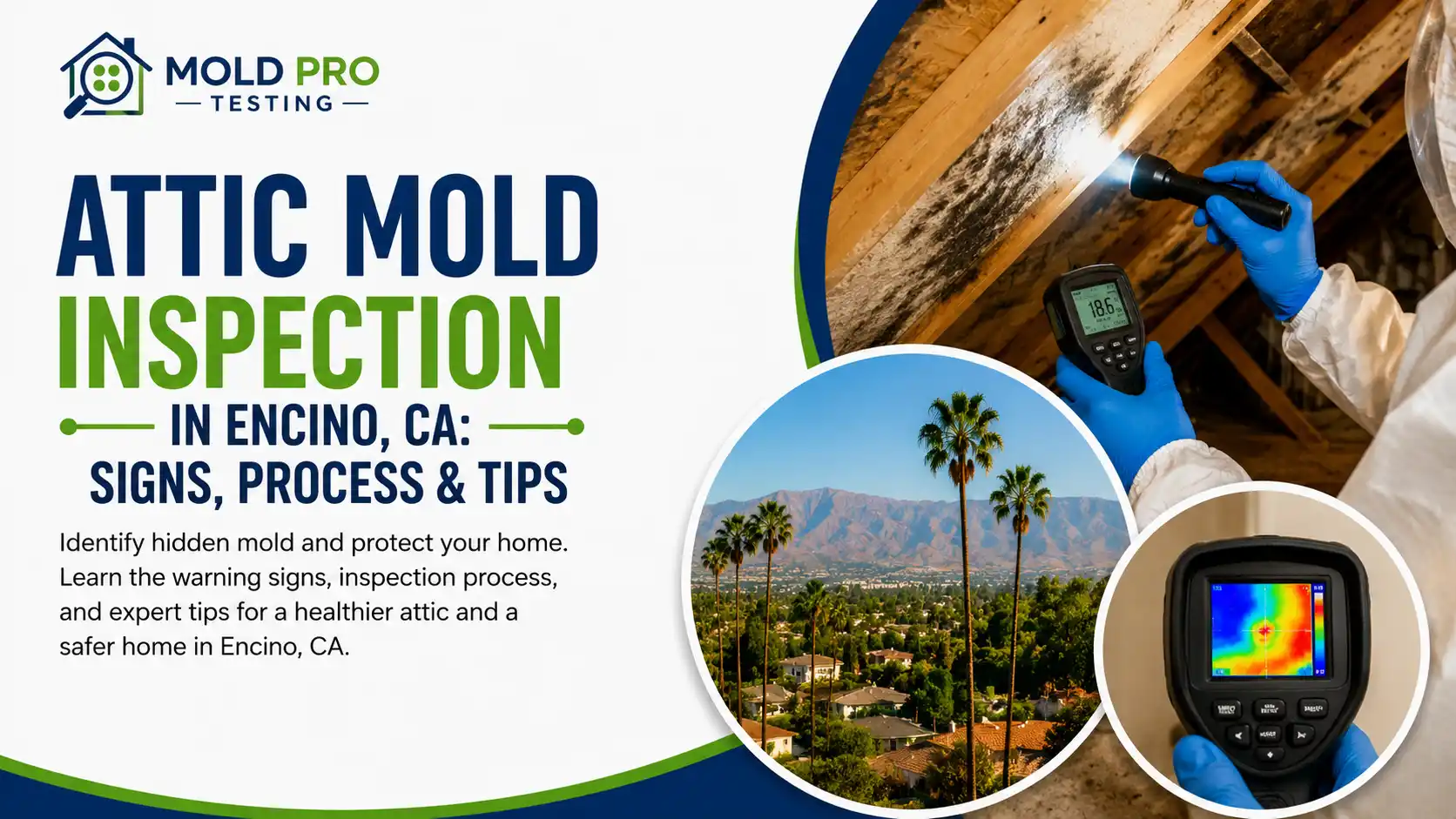

An attic mold inspection checks your roof deck, insulation, rafters, and ventilation for signs of moisture and mold growth that stay hidden from everyday view. It matters because attics trap heat and humidity, which creates ideal conditions for mold long before any smell or stain reaches the living space below.
This guide covers what happens during an attic mold inspection, the warning signs that mean you need one now, and how much it typically costs. You will also learn how to choose a qualified attic mold inspector in Encino.
What Is an Attic Mold Inspection?
An attic mold inspection is a visual and instrument-based check of the attic space to find active mold, moisture sources, and conditions that could lead to mold growth. A technician examines the roof sheathing, rafters, insulation, and any exhaust vents that terminate in the attic. Mold Inspection is often requested by homeowners after noticing a musty smell in an upstairs room or after a roof leak has been repaired.
An attic mold inspection is not the same as full home mold testing. It focuses on one specific area of the property where moisture problems commonly start and often go unnoticed the longest.
Why Does Attic Mold Inspection Matter?
Attic mold inspection matters because attics are one of the most common places for hidden mold to grow undetected. Poor ventilation, roof leaks, and warm, moist air rising from living spaces all create the damp conditions mold needs.
Mold in an attic does not stay contained. Spores can travel through gaps, vents, and shared air paths into living spaces below. Understanding the health risks of hidden mold helps explain why an attic problem can affect indoor air quality throughout the whole home, not just the attic itself.
In Encino, older roofs and attics with limited ventilation face a higher risk of trapped moisture, especially after seasonal rain or a slow, undetected roof leak.
How Does Attic Mold Inspection Work?
Attic mold inspection follows a clear process that identifies both visible mold and the conditions causing it.
1. Visual inspection. The technician examines the roof deck, rafters, insulation, and vents for staining, discoloration, or visible growth.
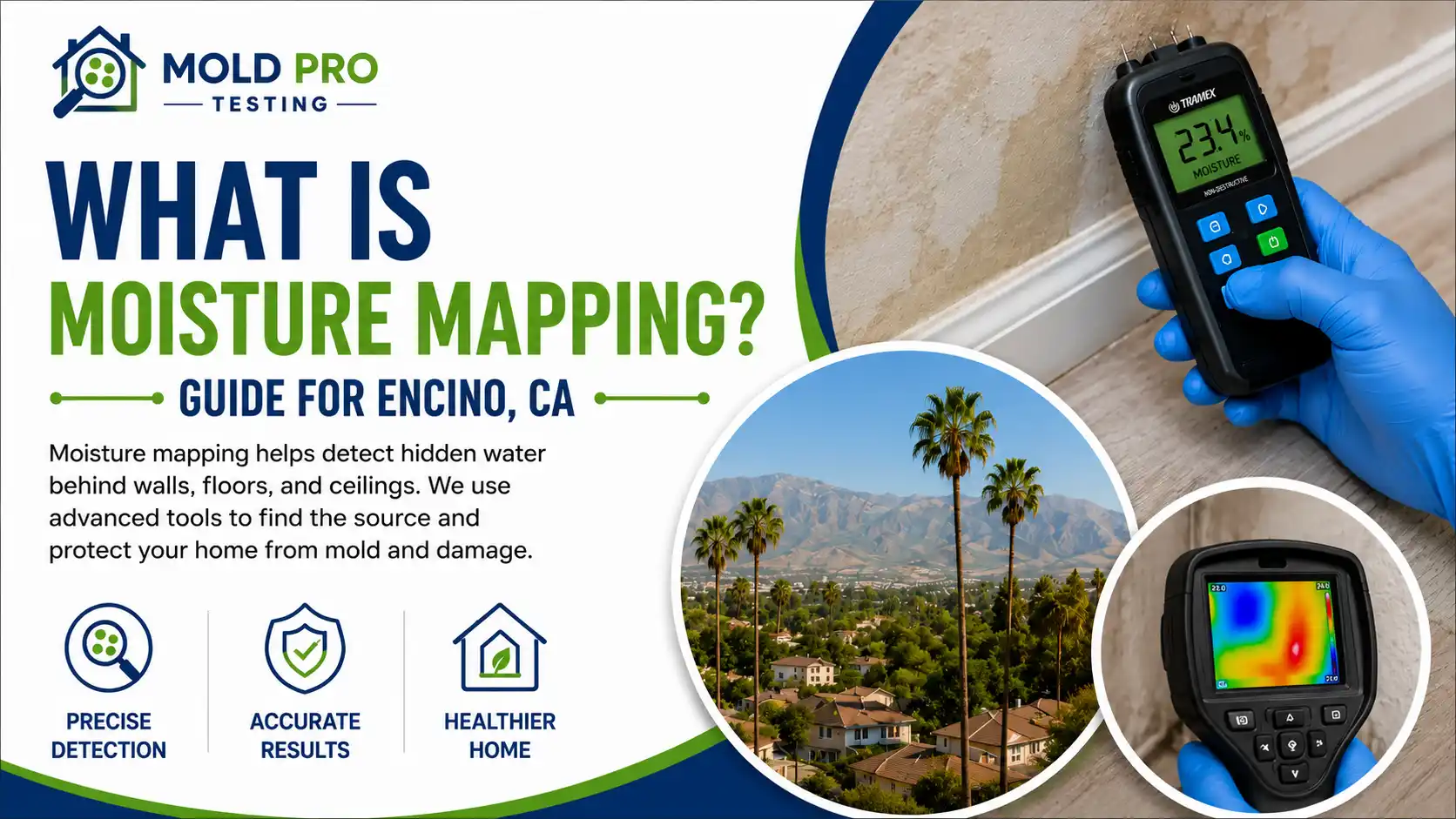
2. Moisture testing. A moisture meter checks wood framing and sheathing for elevated moisture content.
3. Ventilation check. The technician reviews intake and exhaust vents to confirm proper attic airflow.
4. Sample collection. If mold is suspected, air or surface samples are collected for lab analysis.
5. Report and recommendations. The homeowner receives a written report with findings and next steps.
This process pairs well with standard mold testing services when a homeowner wants lab confirmed results alongside the visual attic findings.
Benefits of a Professional Attic Mold Inspection
A professional attic mold inspection gives homeowners clear answers instead of guesswork.
● Finds hidden mold before it spreads to living spaces
● Identifies roof leaks or ventilation problems early
● Protects insulation and wood framing from long term damage
● Provides documentation for insurance or real estate needs
● Gives peace of mind after a known roof leak or storm
● Supports healthier indoor air quality throughout the home
Attics are rarely checked during routine cleaning, which makes a dedicated inspection one of the few ways to catch a problem early.
Common Signs You Need an Attic Mold Inspection
Certain warning signs point directly to a possible attic mold problem.
● Musty odor noticeable in upstairs rooms or closets
● Visible water stains on the ceiling below the attic
● A recent roof leak, even one already patched
● Poor attic ventilation or a hot, stuffy attic space
● Condensation on the underside of the roof deck
● Allergy symptoms that worsen indoors
Reviewing common signs you need professional mold testing can help homeowners decide whether the attic or another part of the home should be checked first.
Common Problems and Mistakes
The most common mistake is assuming a repaired roof leak also solved the moisture problem. Wet insulation and framing can stay damp for weeks after a leak is patched, giving mold time to establish.
Another mistake is relying only on smell to judge attic conditions. Attics are often unfinished and poorly ventilated, so odors do not always travel down into living spaces even when mold is present. According to the attic ventilation concept, proper airflow through soffit and ridge vents is one of the main defenses against trapped moisture in a roof system.
Some homeowners also skip inspection entirely after minor water intrusion, assuming the amount of water was too small to matter. Even small, repeated moisture events can support mold growth over time.
Cost Factors for Attic Mold Inspection
Attic mold inspection cost depends on attic size, accessibility, and whether lab sample testing is included.
A larger attic with multiple access points or additional ventilation issues takes longer to inspect than a small, easily accessible space. Reviewing local mold testing cost information helps homeowners understand typical pricing before booking an appointment.
How to Choose the Right Attic Mold Inspector
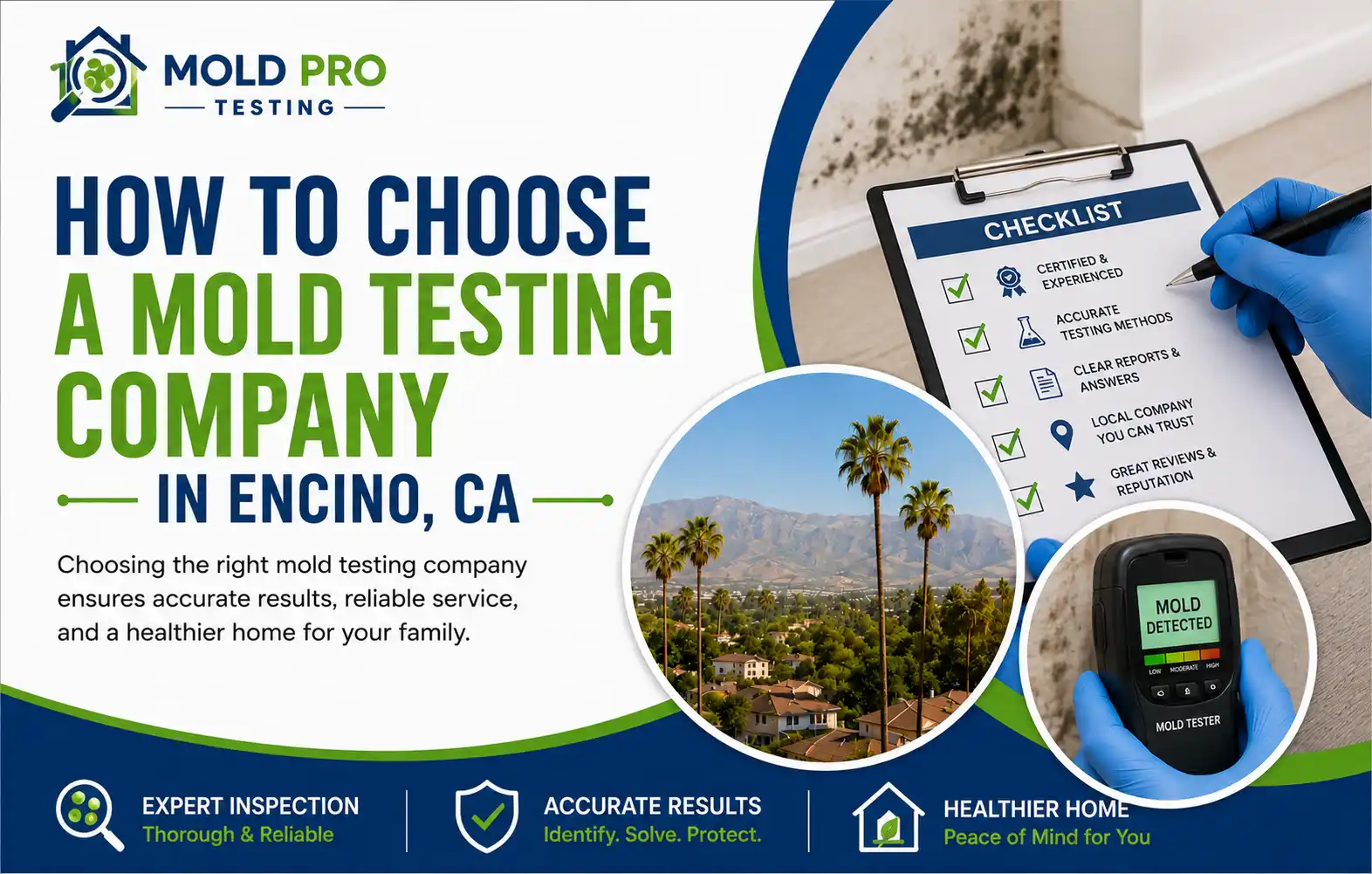
Choose an attic mold inspector who is certified, uses proper moisture testing equipment, and offers a clear written report.
Ask whether the inspector checks ventilation as part of the service, since airflow problems are a leading cause of repeat attic mold issues. Understanding what causes mold in homes helps homeowners ask more informed questions during the hiring process.
Homeowners comparing local providers often check community discussions to see what others experienced, such as this attic mold inspection thread where residents share real results and follow up steps.
Mold Pro Testing serves Encino homeowners with attic focused inspections that combine visual checks, moisture testing, and clear reporting so you know exactly what your attic needs.
Frequently Asked Questions
How do I know if I need an attic mold inspection?
Signs like a musty smell, water stains on the ceiling, a recent roof leak, or poor attic ventilation all point to a possible mold problem. A professional inspection confirms whether mold is present and identifies the moisture source.
How much does an attic mold inspection cost?
Attic mold inspection cost depends on attic size, accessibility, and whether lab testing is included. Larger or harder to reach attics typically cost more due to added inspection time and equipment needs.
Can mold in the attic affect the rest of the house?
Yes. Mold spores can travel through shared air paths, gaps, and ventilation systems into living spaces below. This is why attic mold should be treated as a whole home concern, not an isolated issue.
How long does an attic mold inspection take?
Most residential attic mold inspections take thirty minutes to one hour, depending on attic size and accessibility. Larger attics or those with multiple problem areas may take longer to fully assess.
What causes mold to grow in an attic?
Attic mold usually grows from poor ventilation, roof leaks, or warm moist air rising from living spaces below. These conditions raise humidity levels in the attic, creating an environment where mold spores can settle and grow.
Should I get my attic inspected after a roof repair?
Yes. Roof repairs stop new water from entering, but existing moisture in insulation or framing can remain trapped. An attic mold inspection confirms the space has fully dried and no hidden mold growth has started.
Conclusion
An attic mold inspection catches hidden moisture and mold before it spreads into your living space or causes lasting damage. Watch for warning signs like musty odors, roof leaks, or poor ventilation, and do not wait to have your attic checked. Contact Mold Pro Testing to schedule a professional attic mold inspection for your Encino home.