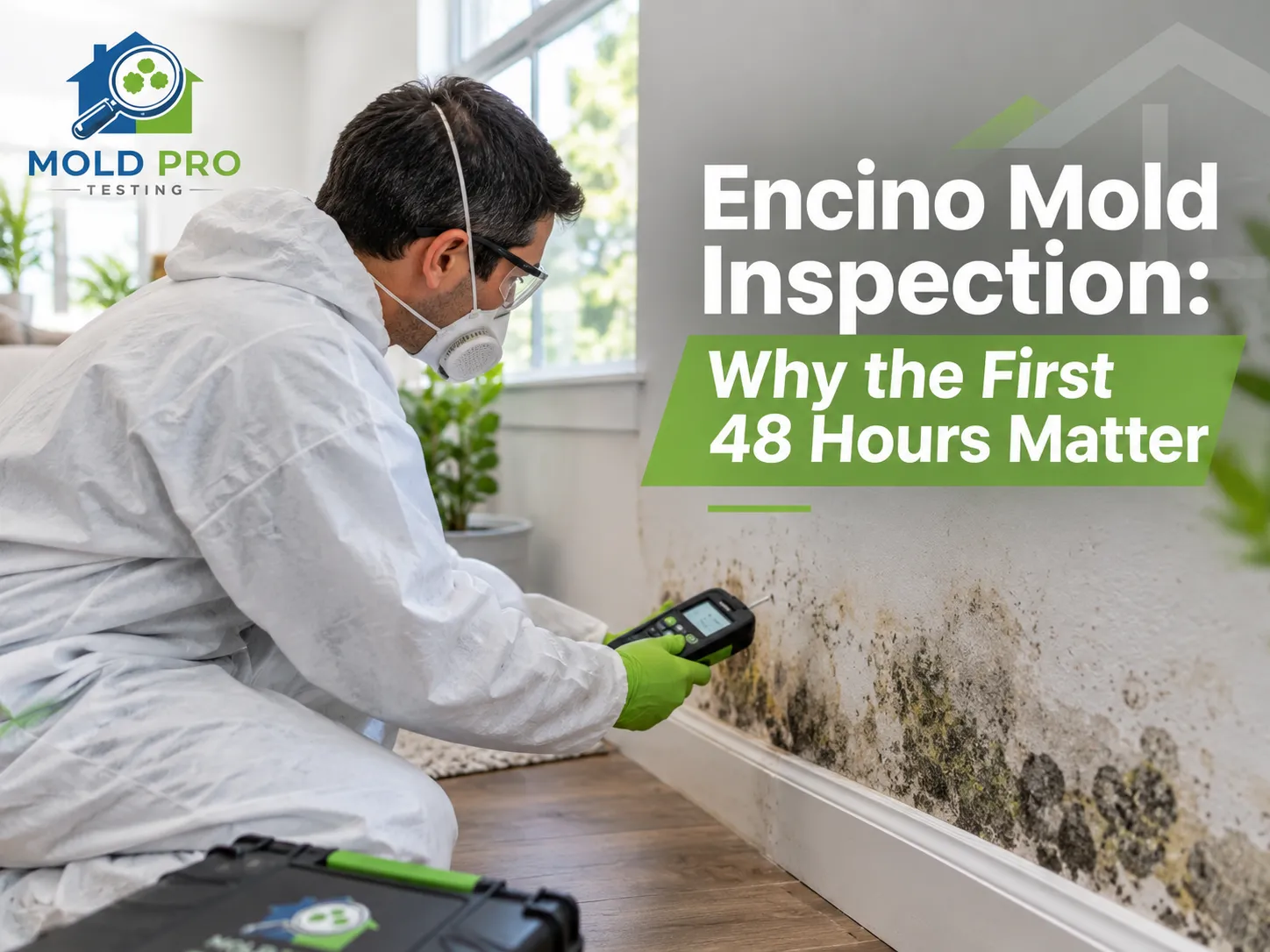

An Encino mold inspection should happen long before you see any stains. When a supply line fails in your home, the real danger isn’t just the water you see and mop up. It’s the ticking clock that starts the moment moisture seeps into drywall paper, subfloor, framing lumber, or insulation backing, all perfect food sources for mold at room temperature, hidden behind walls.
When a supply line fails in your home, the real danger isn’t just the water you see and mop up. According to the team at Mold Pro Testing, it’s the ticking clock that starts the moment moisture seeps into drywall paper, subfloor, framing lumber, or insulation backing, all perfect food sources for mold at room temperature, hidden behind walls.
Mold can start colonizing wet building materials in about 48 hours. After that, you’re not just drying out your property; you’re dealing with a contamination issue.
In Encino, your home’s construction style can make it tough to notice this clock ticking. Slab-on-grade homes often let moisture spread sideways under flooring, showing no signs for weeks. Older ranch-style properties with vented crawlspaces can trap humid air, leading to condensation cycles that keep your framing damp long after the leak is fixed. You won’t see anything on the walls until the mold has spread behind them.
That’s why an emergency mold inspection Encino CA offers is all about timing, not just smells or stains. Water damage is a common and costly issue, about 1 in 60 insured homes file a claim annually, averaging $13,954. Once mold spreads, the Los Angeles County Department of Public Health advises that professional remediation is recommended for mold patches larger than 10 square feet. Moisture mapping helps catch the problem before it crosses that line. We find where moisture hides, collect physical air and surface samples, and deliver third-party lab numbers you can trust.
Defining the Crisis: From Surface Spots to Stage 4 Contamination
Inspection reports use staged severity language to ensure that scope, containment, and cost are based on facts, not impressions. Understanding these stages helps you interpret a report rather than just react to it.
- Stage 1, Surface condition. This involves isolated spots on non-porous surfaces, usually a few square feet or less. Often, it’s more about cleaning and controlling humidity than a major construction issue.
- Stage 2, Localized growth. Mold colonization on porous materials like drywall paper or baseboards, with a moisture source that’s still active or was recently active.
- Stage 3, Concealed, systemic growth. Mold inside wall cavities, under flooring, or in crawlspace framing. This requires containment barriers, negative air pressure, and protective gear for anyone entering the area.
- Stage 4, Extensive contamination. Multi-room or structural involvement, often in areas over 100 square feet, needing full containment, HEPA filtration, controlled demolition, and post-work clearance testing.
The practical dividing line for remediation is the affected area. Los Angeles County guidance states that mold patches larger than 10 square feet warrant professional remediation, the point where a cleaning task turns into a documented remediation project with a defined scope.
The Legal Reality: Mold and the Implied Warranty of Habitability in California
In California, mold isn’t just a maintenance issue. High indoor spore counts, especially with unresolved water intrusion, can make a dwelling unfit according to the legal standards landlords must meet.
Under California’s implied warranty of habitability, a rental must be fit for occupancy, which includes weatherproofing, functioning plumbing, and a healthy environment. Persistent water intrusion and resulting mold can breach this standard, no matter what your lease says.
Identifying the species of mold is crucial. Toxigenic molds like Stachybotrys chartarum thrive in persistently wet conditions, like a slow leak inside a wall. Lab confirmation of such mold, supported by air samples showing high spore counts, shifts the issue from aesthetics to health.
Tenants with unsafe air quality have options: written notice and demand for repairs, withholding rent or using rent to pay for repairs in qualifying situations, and relocation claims if the unit is uninhabitable during repairs. For agents and sellers, the risks are reversed. Moisture history and past mold growth are material facts. Understanding mold habitability California law before listing is cheaper than dealing with a nondisclosure claim after closing.
Why Independent Testing is Non-Negotiable for Insurance and Real Estate
When a company both diagnoses and removes mold, there’s a potential conflict of interest. More positive findings can mean more billable work. Even a competent full-service firm might be structurally conflicted, and adjusters are aware of this.
An independent inspector doesn’t sell additional services. They provide a chain-of-custody report from an accredited lab: spore types, concentrations, indoor vs. outdoor comparisons, and moisture readings tied to specific locations. Adjusters weigh this differently than a contractor’s estimate because one is a measurement and the other is a bid. The same goes for a mold inspection for real estate transactions, where buyer, seller, and lender all need unbiased figures.
Approximately 1 in 60 insured homes file a water damage claim each year, with an average payout of $13,954, enough that the quality of documentation can determine if a claim is paid, reduced, or denied.
Hard numbers come from physical media: spore-trap air cassettes that measure air volume and surface tape lifts or swabs from suspect materials. Both are sealed, logged, and analyzed by a lab with no stake in the outcome.
Encino Mold Inspection Without Tearing Down Drywall
Demolition is expensive and often unnecessary. Opening multiple walls to find one wet stud adds repair costs and dust, and if mold is present, it releases spores without containment. Modern detection reverses this: locate first, open once.
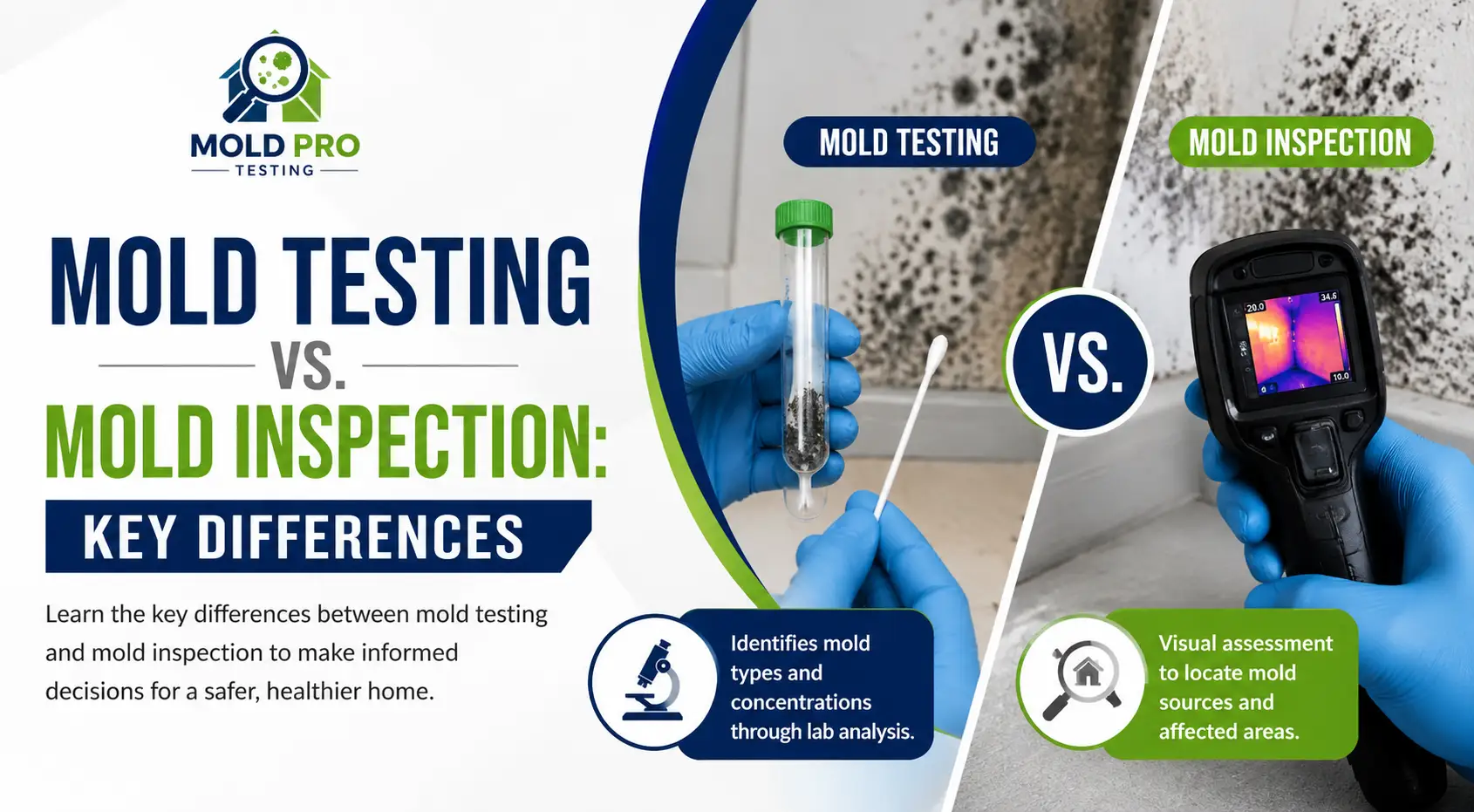
Thermal imaging. An infrared camera reads surface temperature, not moisture. Evaporative cooling makes damp drywall and subfloor read colder than dry material, showing plume shapes, drip paths, and saturation lines behind surfaces. A trained thermal imaging inspection can distinguish true moisture anomalies from things like thermal bridges or sun-loaded exterior walls.
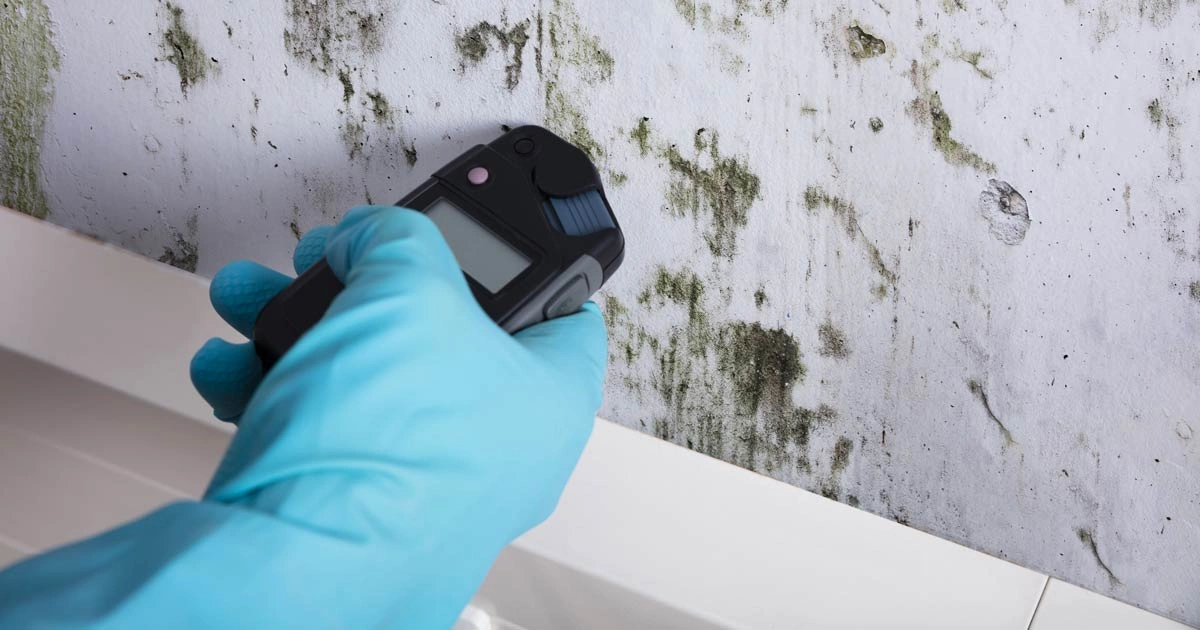
Radio frequency moisture mapping. Non-penetrating RF meters send a signal into materials and measure the dielectric response, detecting water behind tile, hardwood, and dense plaster where a pin meter only samples the surface. Scanning on a grid turns scattered readings into a map with a wet center, pointing back to the source.
Lab sampling. Air cassettes and tape lifts turn that map into evidence.
Together, thermal imaging and moisture mapping help Encino inspectors locate the source of a leak, not just its downstream staining, before any drywall is cut.
The Bottom Line: What You Need to Know About Encino Mold Emergencies
Here’s the quick version for you if you’re an owner, manager, or agent working on a tight deadline:
- Act within 48 hours of any water intrusion. Mold grows on wet materials faster than you might see stains, so decisions made on day one determine if day four is about repairs or remediation.
- Ten square feet is the threshold. Los Angeles County guidance states that mold patches larger than 10 square feet require professional remediation, with lab verification showing what’s present.
- Independent inspection protects your claim and transaction. Insurance adjusters and real estate parties view third-party lab results differently than estimates from the company doing the removal.
- Non-destructive tools prevent unnecessary demolition. Infrared and radio frequency scanning find wet areas before cutting drywall, limiting repairs to genuinely affected areas.
- California protects you from uninhabitable conditions. Documented toxigenic growth and unresolved water intrusion can breach the implied warranty of habitability, creating tenant remedies and seller disclosure duties.
San Fernando Valley mold testing works when it’s measured, not guessed: we find where moisture hides, collect physical air and surface samples, and deliver third-party lab numbers you can trust.
Securing Your Property: Next Steps for Encino Residents
The first hours are in your hands. After that, rely on instruments and a laboratory.
Immediate steps
- Shut off water at the fixture valve or main, and cut power to affected circuits if water reaches outlets or panels.
- Remove standing water and take out saturated items like rugs, padding, cardboard, and stored paper.
- Increase air movement and ventilation, but don’t aim fans at moldy areas, which can spread spores.
- Photograph everything, including the source, before making any repairs.
- Contact an inspector before a demolition crew. A 24/7 mold inspection Los Angeles property owners can schedule same-day preserves the evidence an adjuster needs.
Plan your budget realistically. Inspection costs depend on square footage, affected rooms, crawlspace or attic access, and the number of samples the lab needs to analyze. More samples cost more but provide better proof, on a listing or a claim, that documentation is often the cheapest line item.
Independent, non-destructive assessment protects habitability, supports disclosure, and defends property value. Schedule your inspection before removing any drywall.
Final Thoughts
A water leak in Encino is a race against the clock. Mold can start growing in about 48 hours, often behind walls where you can’t see it, so the first two days decide whether you’re dealing with a repair or a remediation project. Shut off the water, dry what you can, document everything, and bring in an independent inspector before anyone starts cutting into drywall.
A mold inspection in Encino gives you more than peace of mind. Lab-backed results show what’s actually there, support your insurance claim, and protect you in a sale or a rental dispute. If you’ve had a leak recently, contact Mold Pro Testing to schedule an inspection before you open any walls.
FAQs
How fast can mold grow after a water leak?
Mold can start colonizing wet building materials in about 48 hours. That’s why what you do on day one matters more than anything after it.
Why can’t I see mold after a leak?
Moisture hides in drywall, subfloor, framing, and insulation. In Encino, slab homes can let water spread under flooring for weeks, and older homes with vented crawlspaces can stay damp long after the leak is fixed.
When do I need professional mold remediation?
Los Angeles County guidance recommends professional remediation for mold patches larger than 10 square feet. Smaller areas can often be handled with cleaning and humidity control.
Why use an independent mold inspector?
A company that both finds and removes mold has a built-in conflict of interest. An independent inspector only provides a lab-backed report, which insurance adjusters tend to trust more than a contractor’s estimate.
How does mold testing work?
Inspectors collect air samples with spore-trap cassettes and surface samples with tape lifts or swabs. A lab analyzes them and compares indoor results to outdoor ones.