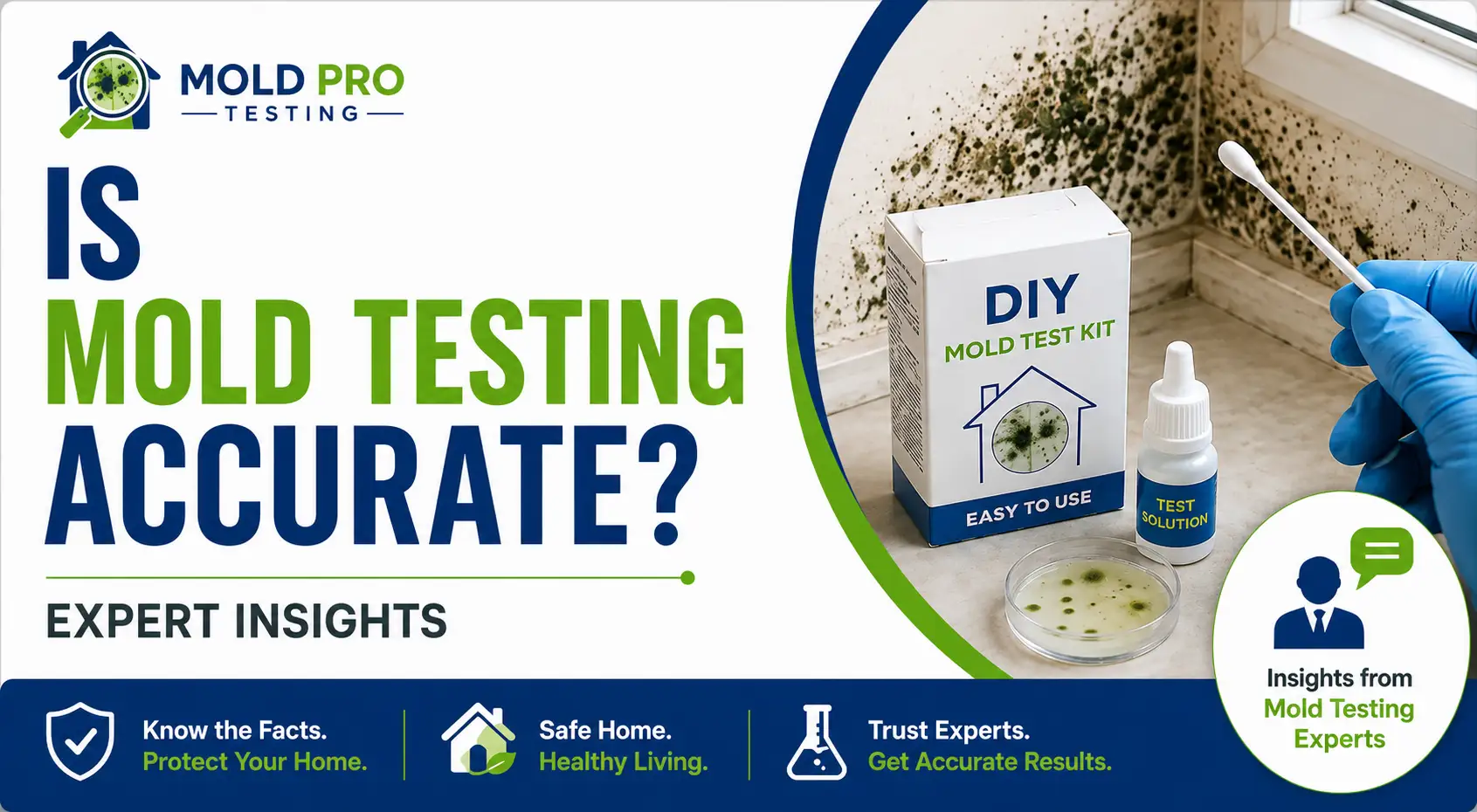

DIY mold testing kits can confirm that mold spores exist in your home, but they are not reliable for measuring how much mold is present or where it’s coming from. Mold Pro Testing sees Encino homeowners bring in DIY kit results every month that either missed a real problem or flagged normal background spore levels as a crisis. This guide explains what DIY mold testing can and cannot tell you, and when professional testing is worth the extra cost.
What Is DIY Mold Testing?
DIY mold testing uses a store-bought kit, usually a petri dish with a growth medium, that you leave exposed in a room for a set period to collect settling mold spores. Some kits include mailing the sample to a lab for identification, while cheaper versions simply show visible mold growth in the dish after a few days. These kits are widely available and inexpensive, which is why many homeowners try them before calling a professional.
Why DIY Mold Testing Accuracy Matters
Accuracy matters because an unreliable result leads to one of two bad outcomes: unnecessary panic and spending, or false reassurance while a real mold problem keeps growing. Mold spores exist in essentially every indoor environment, so a petri dish left out for 48 hours will almost always grow something, regardless of whether your home has an actual problem. Encino’s warm, humid stretches make this even trickier, since normal seasonal spore levels can look alarming on a DIY kit without indicating any genuine issue.
What DIY Mold Tests Can and Cannot Tell You
DIY kits can confirm that mold spores are present. They cannot tell you the concentration, the source, or whether levels are abnormal for your area.
What DIY Kits Can Do
• Confirm that some mold spores exist in the sampled air
• Provide a very rough starting point for further investigation
• Cost far less than professional testing
What DIY Kits Cannot Do
• Measure spore concentration against a normal baseline
• Identify where hidden mold is growing behind walls or under floors
• Distinguish normal background spores from an active mold problem
• Detect the moisture source that’s actually causing the growth
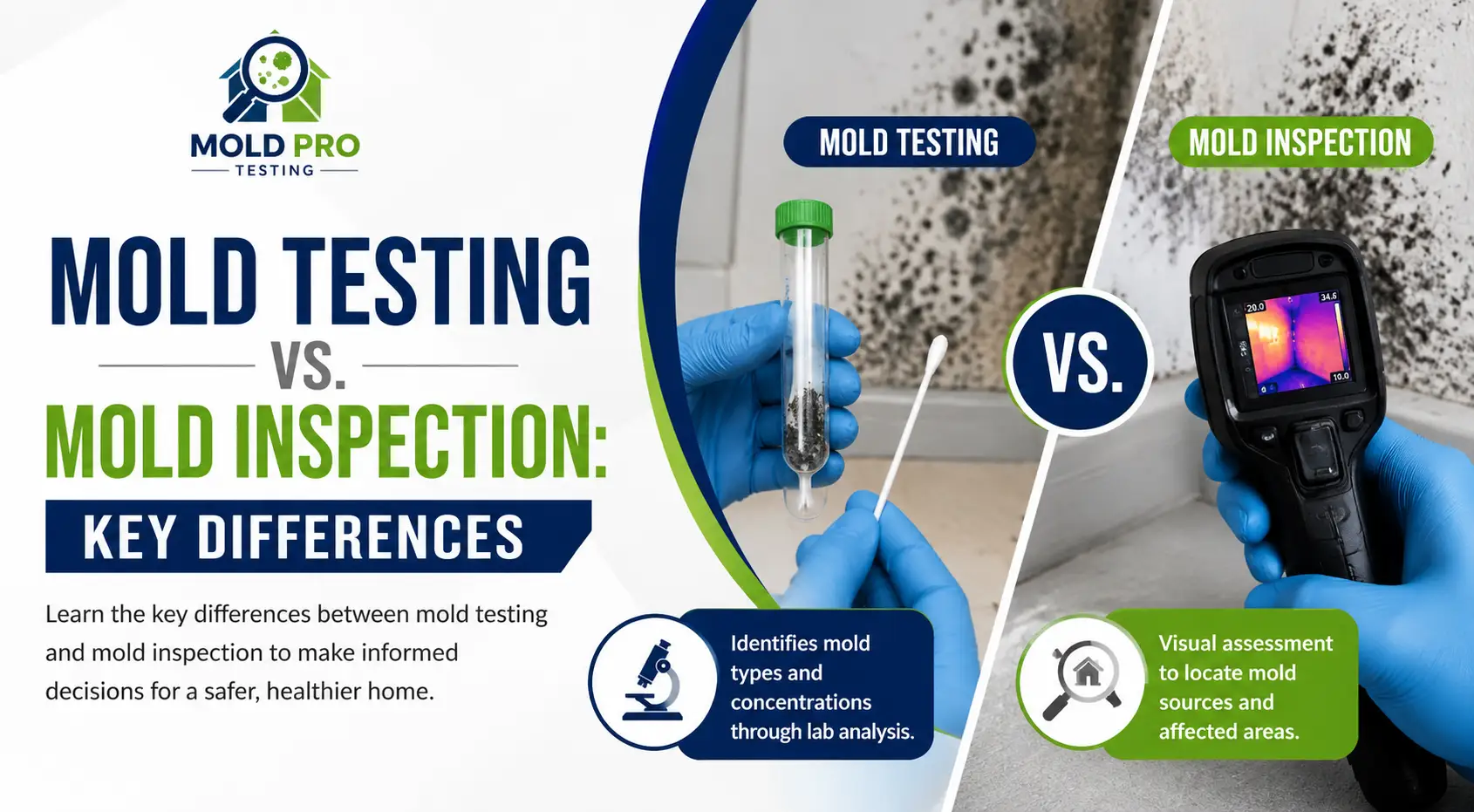
This is the core difference between mold inspection and mold testing: a DIY kit skips the inspection step entirely, which is where the actual moisture source is usually found.
Why Experts Consider DIY Kits Unreliable
Professionals consider DIY kits unreliable mainly because they lack a control sample, which is the single most important part of interpreting mold results. A certified inspector takes an outdoor baseline sample alongside indoor samples, then compares the two to determine whether indoor levels are genuinely elevated. Without that comparison, a DIY result is just a number with no meaningful context.
Sampling technique matters too. Where the dish is placed, how long it’s exposed, and how it’s handled all significantly affect results, and small errors can swing the outcome dramatically.
Common Mistakes Homeowners Make With DIY Kits
The most common mistake is treating any visible growth in the petri dish as proof of a mold problem, when normal indoor air will produce growth in nearly every case. Another common mistake is using a DIY kit instead of investigating an obvious moisture source, like a slow leak or poor ventilation.
• Placing the dish in an unrepresentative spot, like directly under a vent
• Not taking an outdoor control sample for comparison
• Ignoring visible water damage while waiting on kit results
• Assuming a negative kit result means the home is definitively mold-free
Understanding causes mold in homes is often more useful than any test result, since addressing the moisture source is what actually solves the problem. General background on mold biology and how spores behave in indoor environments is available on mold, which helps explain why spore presence alone isn’t a meaningful diagnostic.
DIY vs. Professional Mold Testing
The table below compares what each approach actually delivers.
| Factor | DIY Mold Testing | Professional Mold Testing |
| Cost | Low, typically under $50 per kit | Higher, priced per sample plus lab fees |
| Control sample | Usually none included | Outdoor baseline taken for comparison |
| Source identification | Cannot locate hidden mold or moisture | Inspection identifies moisture source |
| Documentation | Not accepted for real estate or insurance | Certified lab report suitable for documentation |
For homeowners weighing the price difference, this Encino mold testing cost guide outlines what professional testing actually costs locally and what’s included.
How to Decide Between DIY and Professional Testing
Skip DIY testing entirely if you can see mold, smell a musty odor, or have known water damage, since those signs already justify a professional inspection. A DIY kit may satisfy basic curiosity in a home with no symptoms, but it shouldn’t be the basis for any real decision about remediation.
• Call a professional if anyone in the home has unexplained respiratory symptoms
• Call a professional if you need documentation for a sale or insurance claim
• Call a professional after any water damage event, regardless of DIY results
• Address visible moisture sources before spending money on any test
Reviewing the signs you need professional mold testing helps homeowners tell the difference between a situation a DIY kit might address and one that clearly needs certified assessment. Many homeowners also compare experiences on Quora about DIY kit results versus professional findings, and the recurring theme is that kits rarely changed what the professional eventually recommended.
Frequently Asked Questions
Are DIY mold test kits accurate?
DIY mold test kits can confirm that mold spores are present but are not accurate for measuring concentration or locating the source. Without an outdoor control sample for comparison, the results lack the context needed to determine whether levels are actually abnormal.
Will a DIY mold test always show mold?
Yes, in most cases a DIY petri dish kit will grow something, since mold spores exist in nearly all indoor air. Visible growth in the dish alone does not indicate a mold problem in your home.
Can I use a DIY mold test for a home sale?
No, DIY mold test results are generally not accepted for real estate transactions or insurance claims. Buyers, agents, and insurers typically require a certified lab report from a professional mold assessment.
How much does professional mold testing cost compared to DIY?
DIY kits typically cost under $50, while professional mold testing costs more due to on-site inspection and certified lab analysis. The higher cost buys you a control sample, source identification, and a report you can actually act on.
What should I do if my DIY test shows mold?
Treat a positive DIY result as a prompt to schedule a professional inspection rather than as confirmation of a problem. A certified inspector can determine whether levels are genuinely elevated and identify the moisture source causing any growth.
Final Thoughts
DIY mold testing tells you spores exist, which is true of nearly every home, but it can’t tell you whether you have a real problem or where it’s coming from. Visible mold, musty odors, or recent water damage all warrant professional assessment rather than a store-bought kit. Mold Pro Testing provides certified mold inspection and testing across Encino, giving you results you can actually act on.